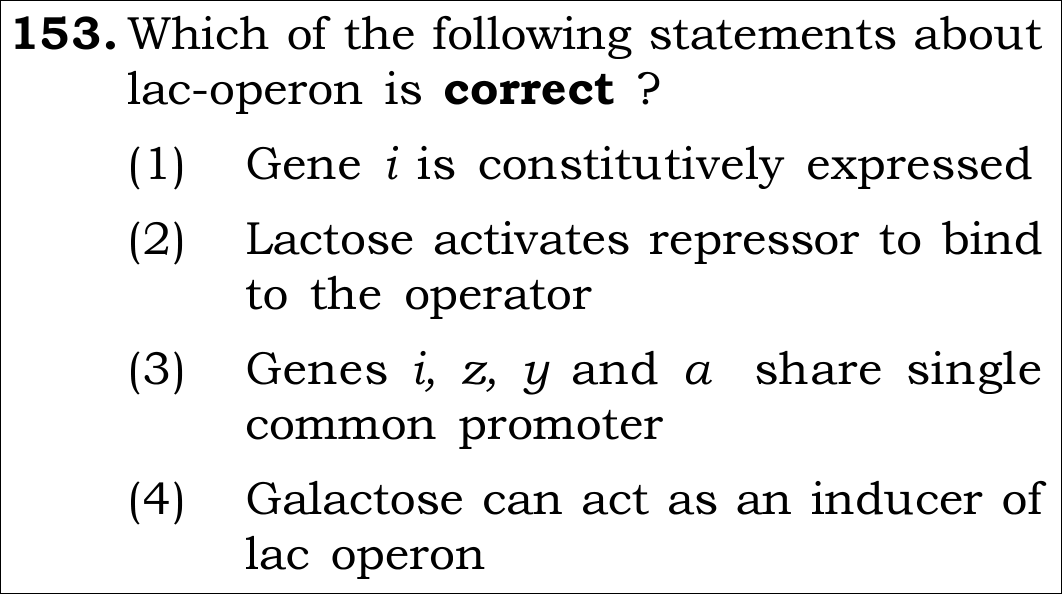
The 30-Second Exam Hall Shortcut: ⚡ Lac Operon Diagnostic Filter
i-gene is ON 24/7 (Constitutive); Lactose is INDUCER (not co-repressor)!
Step-by-Step Rigorous Workflow & Mathematical Proof
Function of the i-Gene
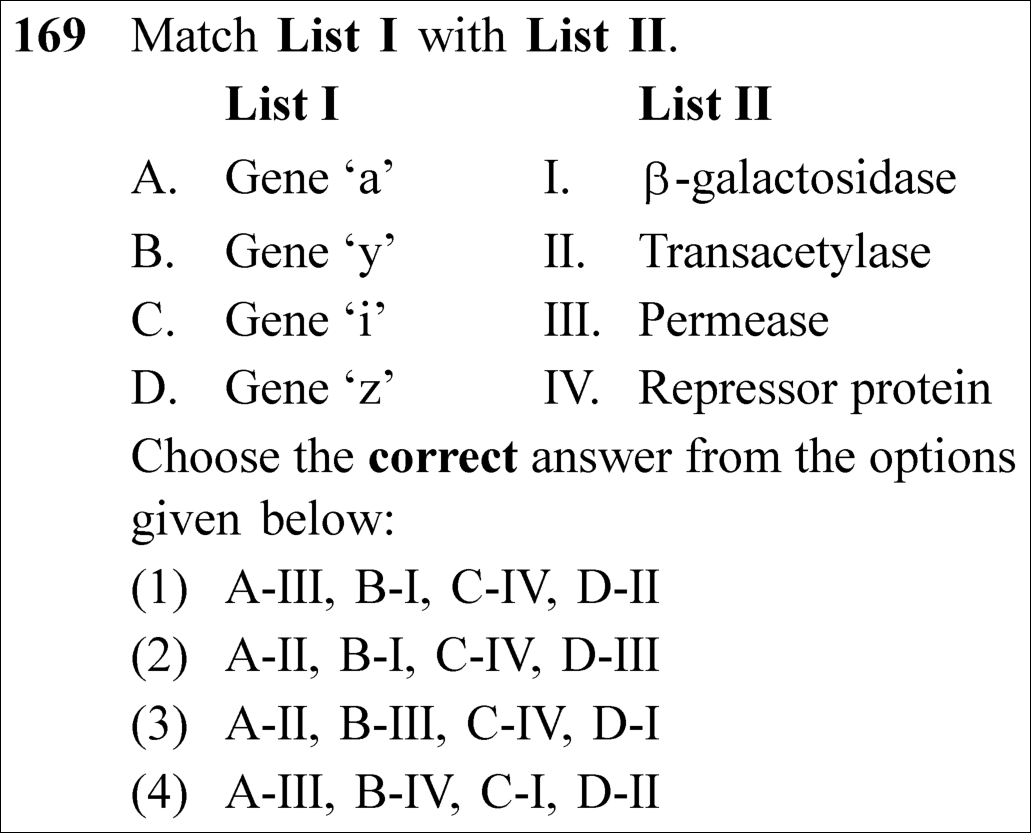
The lac operon consists of one regulatory gene (the i gene, from the term inhibitor) and three structural genes (z, y, and a). The i gene codes for the repressor protein of the lac operon. It is synthesized constitutively (all the time) at a basal level.
- • Constitutive expression means continuous, non-regulated transcription regardless of lactose presence.
Action of Inducer vs. Structural Genes
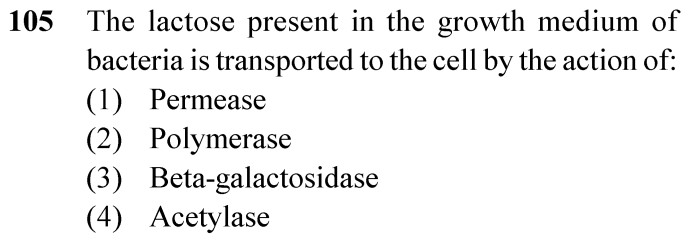
Lactose (or allolactose) acts as an inducer by binding to the repressor tetramer, causing conformational change and inactivating it. The structural genes code for enzymes: z = β-galactosidase, y = permease, a = transacetylase.
- • Negative regulation: the repressor bound to operator blocks RNA polymerase; inducer lifts repression.
360° Option Elimination Engine Key Feature
Diagnose every choice: Know exactly why the right option works and why distractors fail.
100% correct. NCERT states verbatim: "The repressor of the operon is synthesised, all the time – constitutively – from the i gene."
Incorrect. Lactose is an INDUCER that binds and inactivates the repressor. A co-repressor (like tryptophan in the trp operon) activates the repressor.
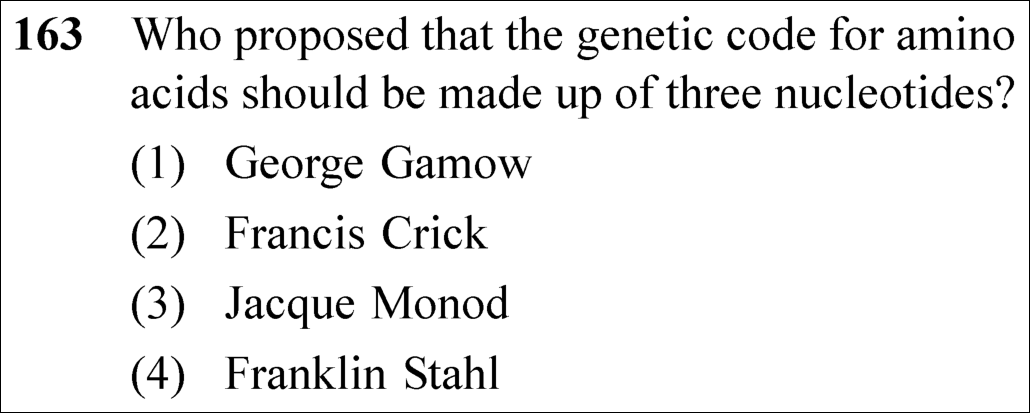
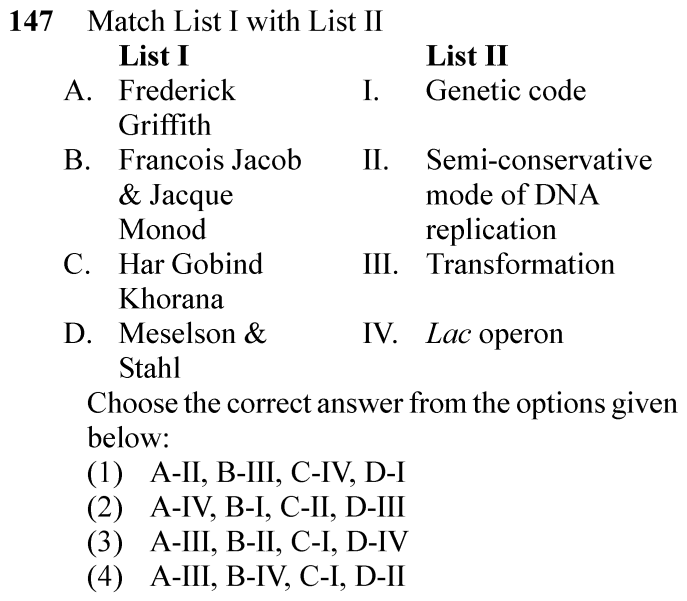
Incorrect. Jacob and Monod elucidated the lac operon in 1961. They received the Nobel Prize in 1965.
Incorrect. The z gene codes for beta-galactosidase. The "a" gene codes for transacetylase.
NTA Trap Alert: Structural Gene Product Inversion (z, y, a)
Students frequently mix up the three structural genes. Use the mnemonic "Z-B, Y-P, A-T" (Zebra Bites, Yellow Panther, Always Tired) to remember z -> β-gal, y -> permease, a -> transacetylase.
Core NEET Syllabus Standard
"The repressor of the lac operon is synthesized constitutively from the i gene."