The 30-Second Exam Hall Shortcut: ⚡ Echinoderm Symmetry Paradox
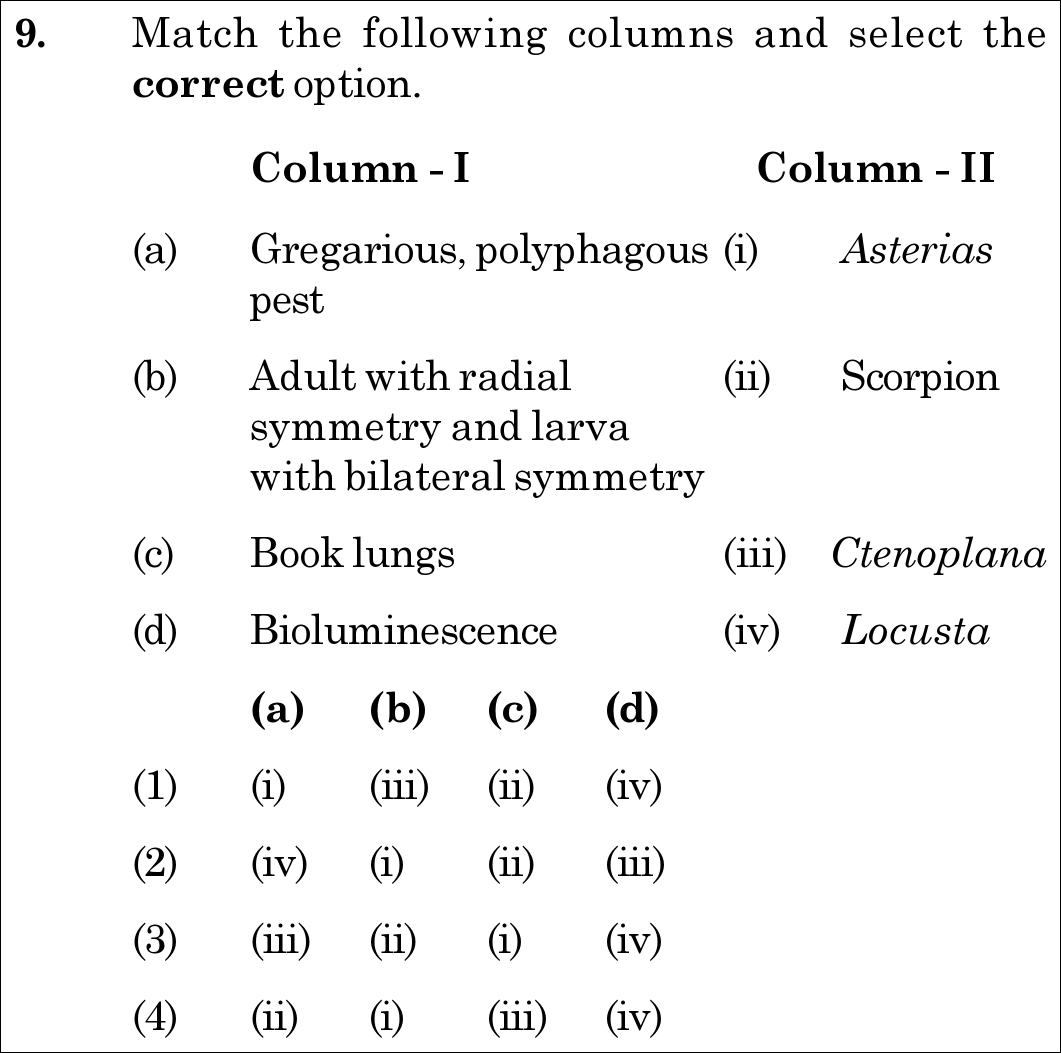
Adult Echinoderms = Radial; Echinoderm Larvae = Bilateral!
Step-by-Step Rigorous Workflow & Mathematical Proof
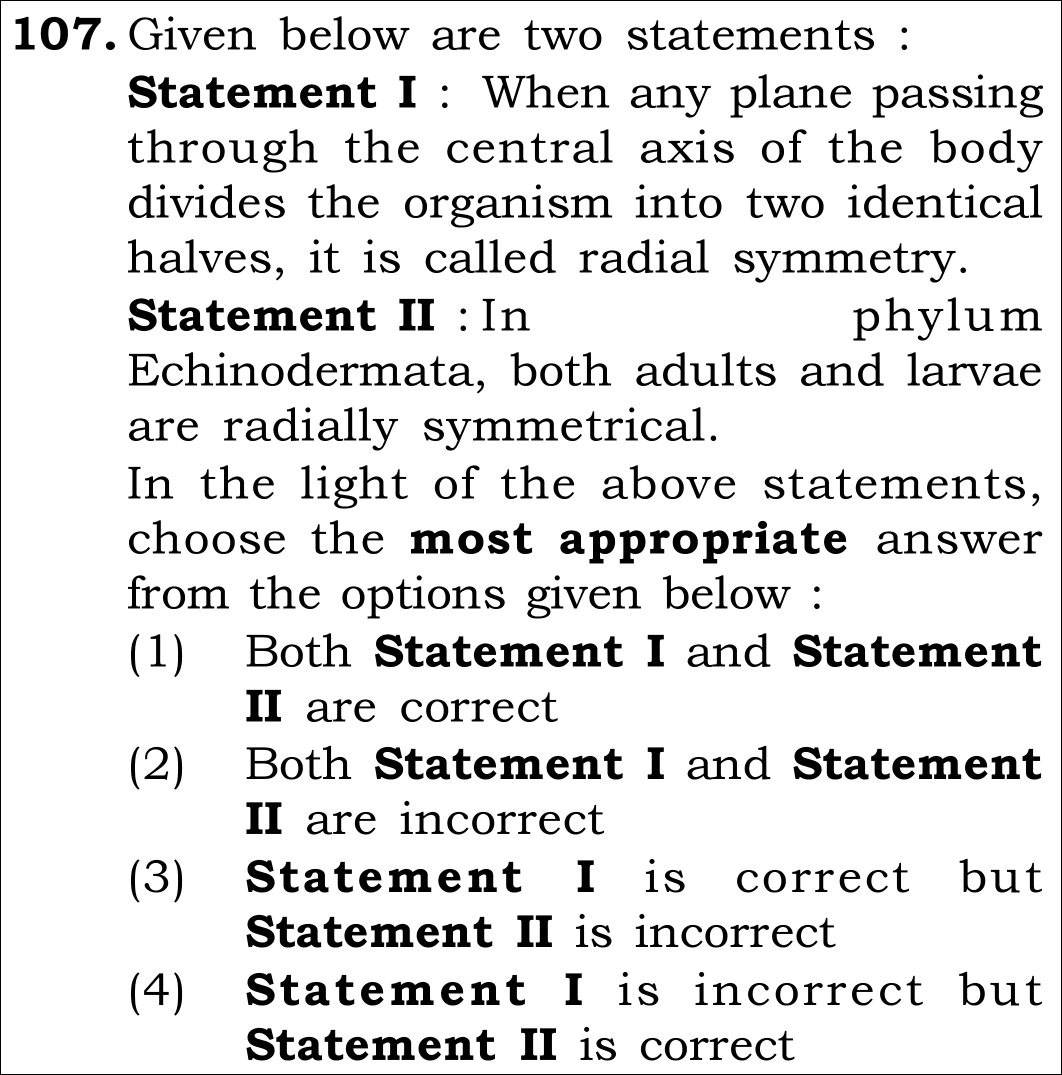
Evaluate Statement I (Definition of Radial Symmetry)
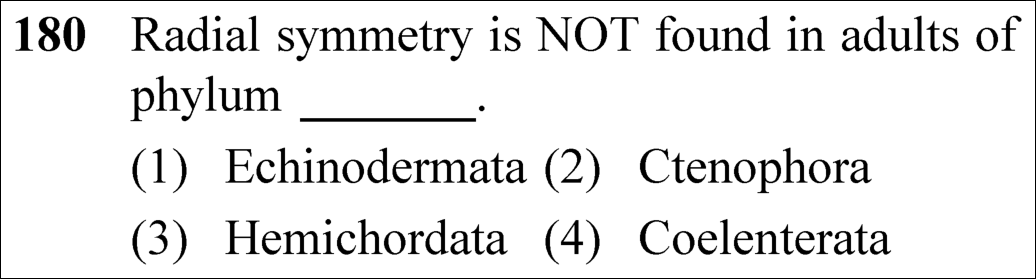
In animal morphology, when any longitudinal plane passing through the central body axis divides an organism into two identical mirrored halves, the body plan exhibits radial symmetry. Examples include coelenterates, ctenophores, and adult echinoderms.
- • Statement I is verbatim text from NCERT Animal Kingdom (Section 4.1.2 Symmetry).
Evaluate Statement II (Symmetry in Phylum Echinodermata)
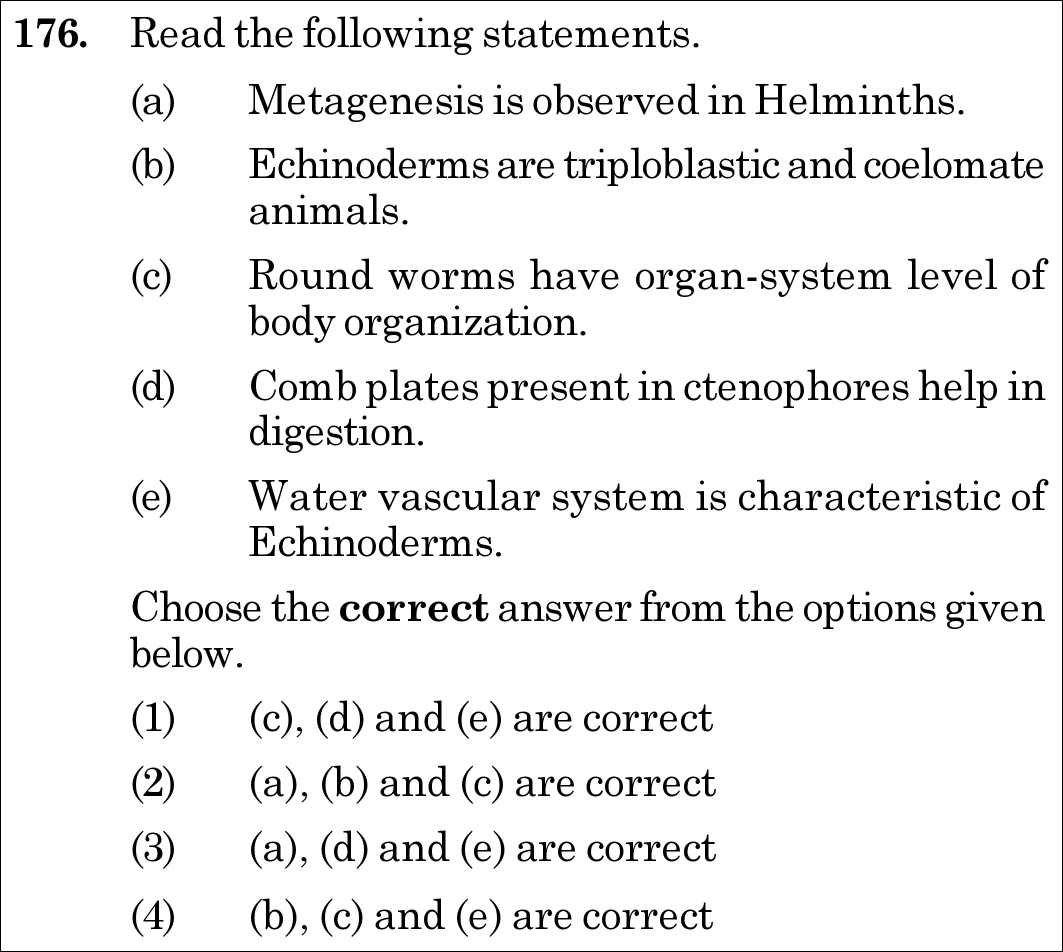
Echinoderms display a unique developmental transition in symmetry: they develop from free-swimming ciliated larvae that are bilaterally symmetrical (reflecting their deuterostome ancestry with chordates), which then metamorphose into adults exhibiting pentamerous radial symmetry.
- • Because larvae are bilateral, stating that "both adults and larvae are radially symmetrical" is definitively false.
Determine the Correct Option
Since Statement I is correct and Statement II is incorrect, Option (3) is the solely valid choice.
- • Matches official NTA final answer key Option C / (3).
360° Option Elimination Engine Key Feature
Diagnose every choice: Know exactly why the right option works and why distractors fail.
Incorrect. Fails because echinoderm larvae possess bilateral, not radial, symmetry.
Incorrect. Statement I is an unquestioned NCERT textbook definition.
Accurate. Radial symmetry definition is correct, while Statement II erroneously assumes larvae are radial.
Completely contrary to canonical facts.
NTA Trap Alert: The Echinoderm Larva Trap
Echinoderms are the only non-chordate phylum tested where the larval stage possesses bilateral symmetry while the adult exhibits secondary radial symmetry. NEET tests this specific contrast repeatedly.
Core NEET Syllabus Standard
"Radial symmetry permits dividing into equal halves along any central plane. Echinoderms uniquely transition from bilateral larvae to secondary radial adults."