📋 Given Parameters & Problem Setup
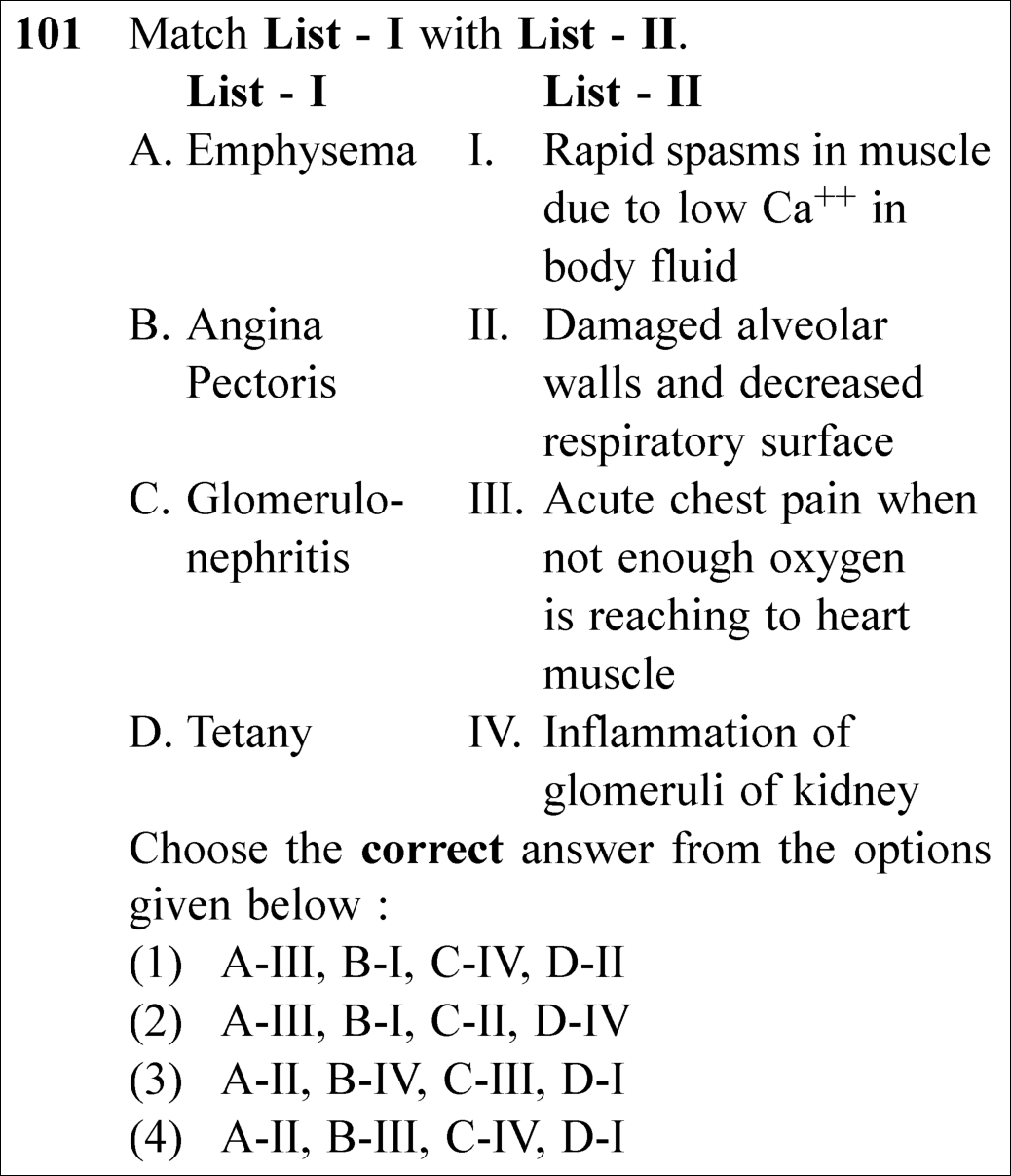
List I (Disorders) A. Emphysema, B. Angina Pectoris, C. Glomerulonephritis, D. Tetany
List II (Symptoms/Pathology) I. Rapid spasms in muscle due to low Ca⁺⁺ in body fluid, II. Damaged alveolar walls and decreased respiratory surface, III. Acute chest pain when not enough oxygen is reaching to heart muscle, IV. Inflammation of glomeruli of kidney
Emphysema = Damaged alveolar walls (A-II). Angina Pectoris = Heart ischemic chest pain (B-III). Glomerulonephritis = Glomerular kidney inflammation (C-IV). Tetany = Low Ca²⁺ muscle spasms (D-I)! ⟹ A-II, B-III, C-IV, D-I!
1 A. Emphysema: Chronic obstructive pulmonary disease where alveolar walls are damaged, reducing surface area for gas exchange ⟹ A matches II.
2 B. Angina Pectoris: Symptom of coronary ischemia characterized by acute retrosternal chest pain due to insufficient oxygen supply to myocardium ⟹ B matches III.
3 C. Glomerulonephritis: Inflammation of the renal glomeruli ⟹ C matches IV.
4 D. Tetany: Hypocalcemic tetany characterized by wild, rapid muscle spasms caused by low extracellular Ca²⁺ ⟹ D matches I.
5 Combined match: A-II, B-III, C-IV, D-I.
6 Select Option (4) in under 10 seconds!
🛡️ Why You Can 100% Trust This Shortcut: NCERT Biology Chapters 17, 18, 19, 20 (Disorders Sections) verbatim.
⚠️
Tetanus is caused by Clostridium tetani bacteria (lockjaw). TETANY is caused by low calcium (hypocalcemia) in extracellular fluid, leading to wild muscle twitches and spasms!
🛡️ How to avoid the -1 mark: Remember: Tetany = Low Calcium; Tetanus = Clostridium toxin!
📖
NEET Biology Core Syllabus · Locomotion and Movement & Excretory Products Standard Benchmark
Core Scientific Principle Tested:
"Emphysema: damaged alveolar walls; Angina: cardiac chest pain; Glomerulonephritis: inflamed glomeruli; Tetany: low Ca²⁺ spasms."
Syllabus Focus: Disorders of Human Systems (Respiratory, Circulatory, Excretory, Muscular)
Emphysema = Alveoli (II), Angina = Chest Pain (III), Nephritis = Glomeruli (IV), Tetany = Low Calcium (I) ⟹ Option 4!