The 30-Second Exam Hall Shortcut: ⚡ Descending = H₂O, Ascending = Salt Rule
Descending limb lets Water out; Ascending limb NEVER lets Water out (Impermeable)!
Step-by-Step Rigorous Workflow & Mathematical Proof
Physiology of Henle's Descending Limb
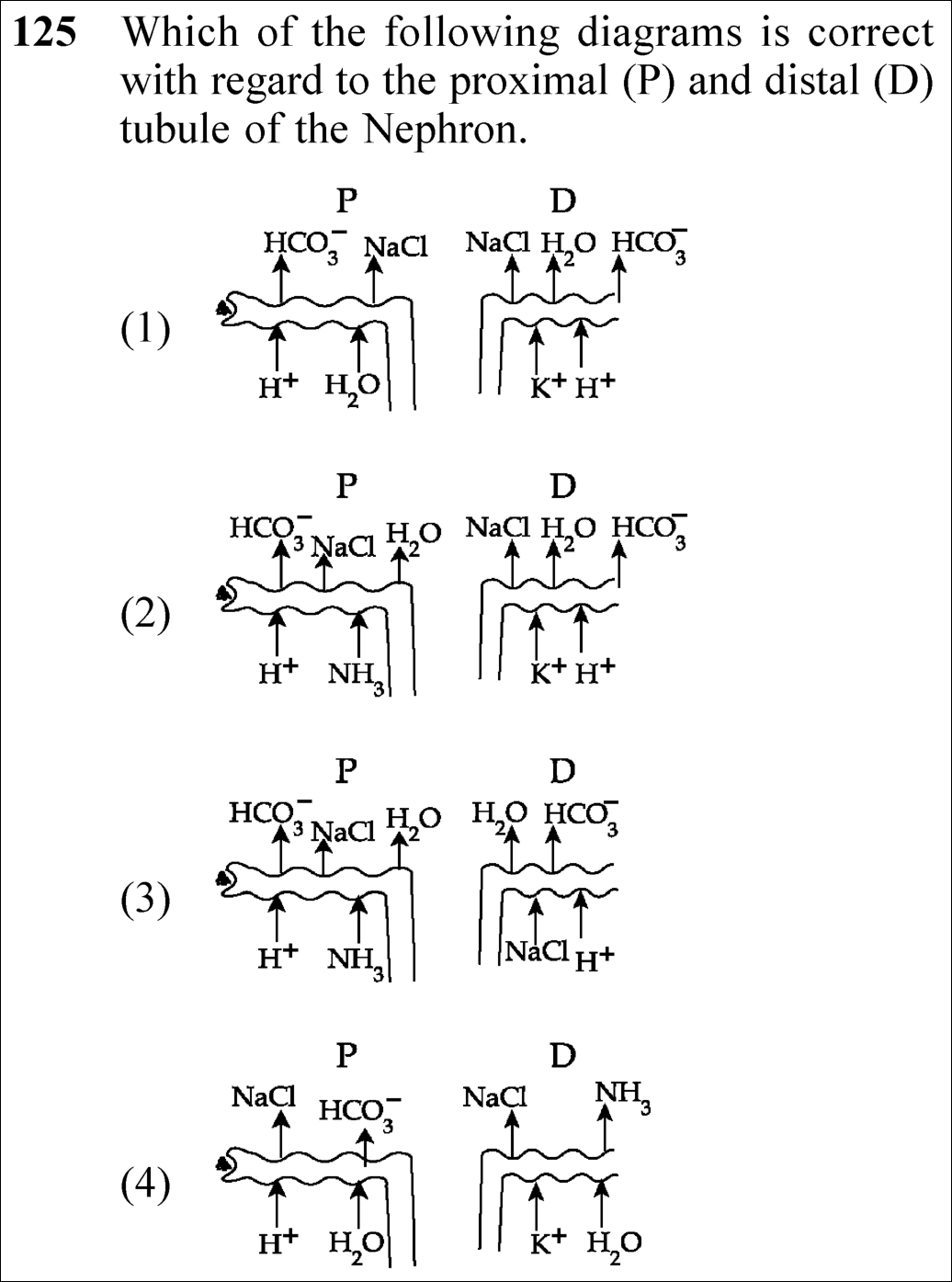
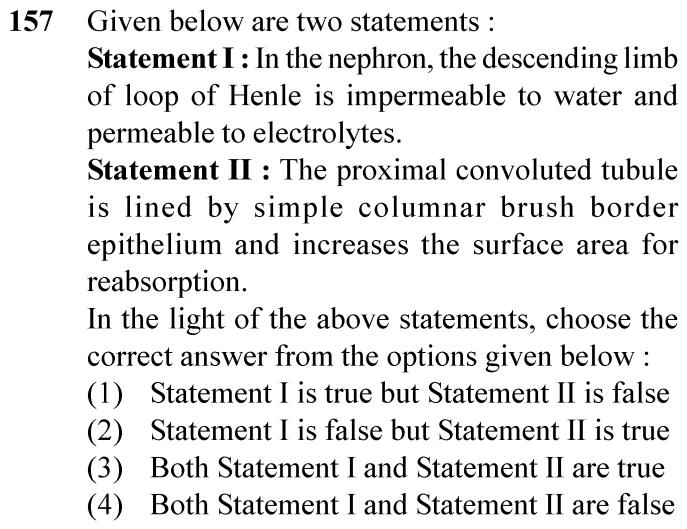
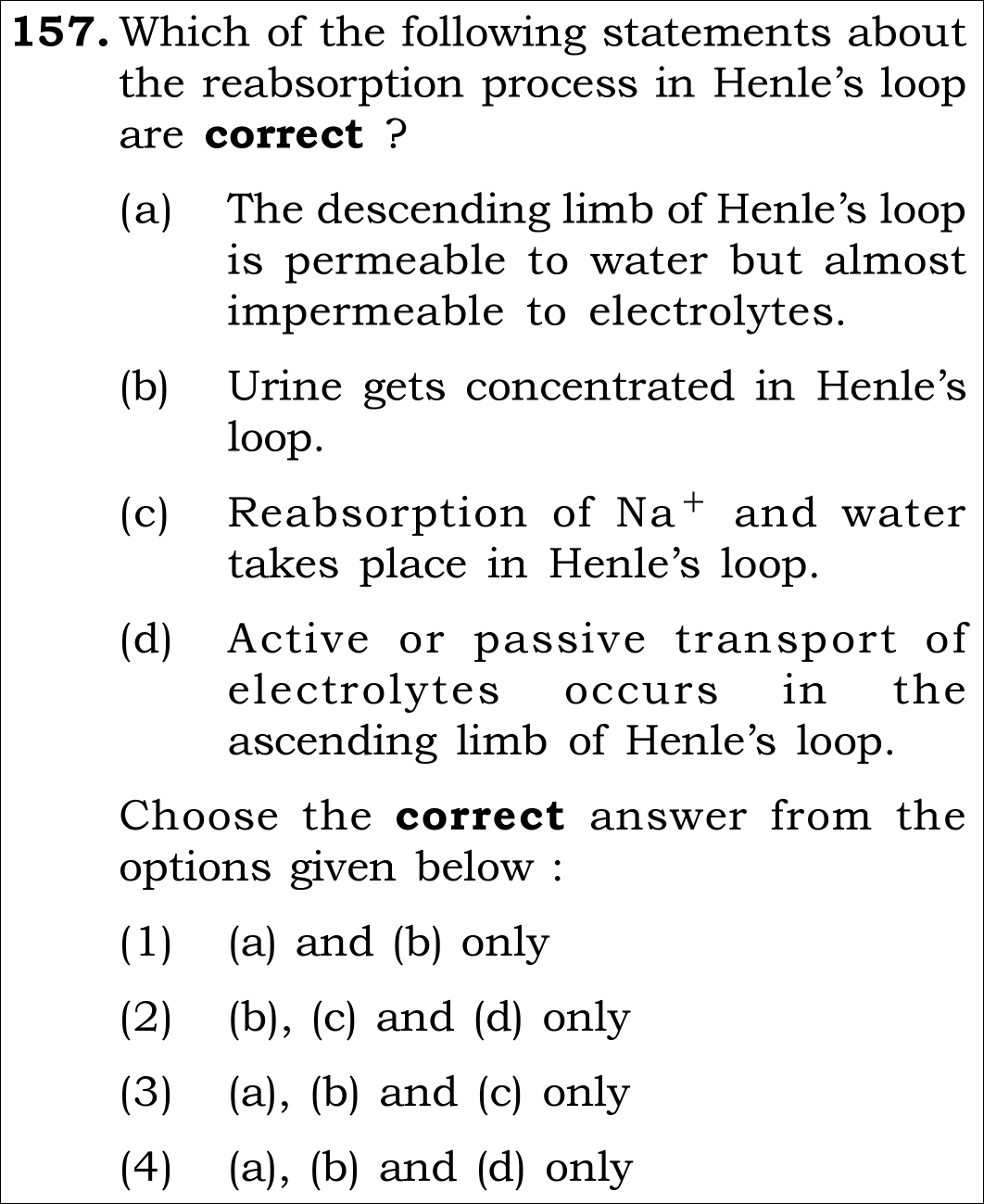
The descending limb of loop of Henle is permeable to water but almost impermeable to electrolytes. As the filtrate flows downward into the hypertonic medullary interstitium, water leaves by osmosis, concentrating the filtrate up to 1200 mOsm/L at the hairpin turn.
- • Statements (a) and (b) are both factually correct.
Physiology of Henle's Ascending Limb
The ascending limb is impermeable to water but allows transport of electrolytes actively or passively. Therefore, as the concentrated filtrate passes upward, it gets diluted due to the passage of electrolytes out into the medullary fluid, dropping osmolarity to ~200 mOsm/L.
- • Statement (c) is false because it wrongly asserts ascending limb is permeable to water.
- • Statement (d) is correct because filtrate is progressively diluted upward.
360° Option Elimination Engine Key Feature
Diagnose every choice: Know exactly why the right option works and why distractors fail.
Incorrect. Contains false statement (c); ascending limb is strictly impermeable to water.
Incorrect. Contains false statement (c).
Incorrect. Contains false statement (c) and omits valid statement (d).
100% correct. Statements (a), (b), and (d) are canonical NCERT facts, while statement (c) is false.
NTA Trap Alert: Water Permeability Inversion in Ascending Limb
Examiners frequently test the contrast between limbs. Descending limb = permeable to water, impermeable to salt. Ascending limb = impermeable to water, permeable to salt.
Core NEET Syllabus Standard
"Descending limb is permeable to water, ascending limb is impermeable to water and transports electrolytes."