NEET 2021 Botany Question 103 Solution
Question
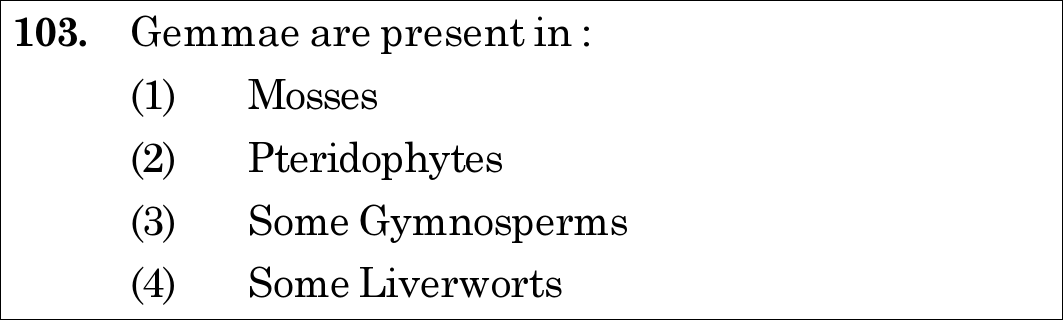
Gemmae are present in:
- (1)Mosses
- (2)Pteridophytes
- (3)Some Gymnosperms
- (4)Some Liverworts
Dynamic 180-question full-length simulator mixed dynamically from all 6 years for 2027 & 2026 aspirants.
Gemmae are present in:
Gemmae are specialized green, multicellular asexual buds born in gemma cups located on the dorsal thallus surface of liverworts like Marchantia! Match Option (4) directly!
Gemmae (singular: gemma) are specialized vegetative propagules found in bryophytes:
In liverworts such as *Marchantia*, gemmae develop inside cup-shaped receptacles called gemma cups positioned along the midrib on the dorsal surface of the gametophytic thallus.
When rain drops splash into the gemma cups, the mature gemmae detach from their stalks, get washed away, and germinate directly to establish new haploid thalli.
Diagnose every choice: Know exactly why the right option works and why distractors fail.
Mosses reproduce vegetatively by fragmentation and budding in the secondary protonema, not via canonical gemma cups.
Pteridophytes reproduce vegetatively by tubers, adventitious buds, or fragmentation of rhizomes, not by gemmae.
Gymnosperms are vascular seed plants that do not form gemmae.
Gemmae are distinctive asexual reproductive structures found in liverworts such as Marchantia.
NCERT clearly differentiates: Liverworts reproduce by gemmae in gemma cups; Mosses reproduce vegetatively by budding in the secondary protonema.
"Liverworts reproduce asexually by fragmentation or by specialized multicellular asexual buds called gemmae."
Test your speed and accuracy in the authentic 200-minute timed NTA simulator.
Spotted a mistake in this solution? Report an error ([email protected])
Cover all 1,140 official NEET questions in 285 days at your own pace. Progress is saved on your device. No login needed.