NEET 2024 Zoology Question 153 Solution
Question
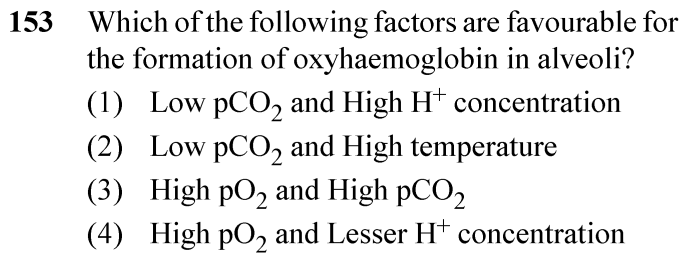
Which of the following factors are favourable for the formation of oxyhaemoglobin in alveoli?
Dynamic 180-question full-length simulator mixed dynamically from all 6 years for 2027 & 2026 aspirants.
Which of the following factors are favourable for the formation of oxyhaemoglobin in alveoli?
In alveoli: High pO₂, Low pCO₂, Lower H⁺ concentration (higher pH), and Lower temperature strictly favor oxyhaemoglobin formation!
Haemoglobin is a red coloured iron containing pigment present in RBCs. can bind with haemoglobin in a reversible manner to form oxyhaemoglobin. Binding of oxygen with haemoglobin is primarily related to partial pressure of . Partial pressure of , hydrogen ion concentration () and temperature are the other factors that interfere with this binding.
In the alveoli, where there is high , low , lesser concentration and lower temperature, the factors are all favourable for the formation of oxyhaemoglobin. In the tissues, where low , high , high concentration and higher temperature exist, the conditions are favourable for dissociation of oxygen from the oxyhaemoglobin.
Option (4) directly and correctly captures "High pO₂ and Lesser H⁺ concentration".
Diagnose every choice: Know exactly why the right option works and why distractors fail.
High H+ concentration promotes dissociation (Bohr effect), not formation.
High temperature shifts the oxygen dissociation curve to the right, favoring unloading, not loading.
In alveoli, pCO2 is low, not high.
High pO₂ combined with lesser H⁺ concentration directly facilitates maximal oxyhaemoglobin association in alveoli.
Confusing "lesser H+ concentration" with acidic conditions.
"In the alveoli, where there is high pO2, low pCO2, lesser H+ concentration and lower temperature, the factors are all favourable for the formation of oxyhaemoglobin."
Test your speed and accuracy in the authentic 200-minute timed NTA simulator.
Spotted a mistake in this solution? Report an error ([email protected])
Cover all 1,140 official NEET questions in 285 days at your own pace. Progress is saved on your device. No login needed.